
Here’s What Mattress Recycling Really Involves
For most people, the mattress collection process ends the moment the truck pulls away – the mattress is gone, the bedroom feels a little more spacious, and there’s genuinely no reason to think about it any further. But every now and then, a quiet question surfaces: did it actually go through a proper mattress recycling process, or did it just end up in landfill like so much else that gets carted away by a removal service? It’s a fair thing to wonder, and the honest answer is that it depends almost entirely on who you booked, because not every company that calls itself a removal service treats what happens after the pickup with the same level of care.
The Uncomfortable Truth About Most Mattress Removals in Australia
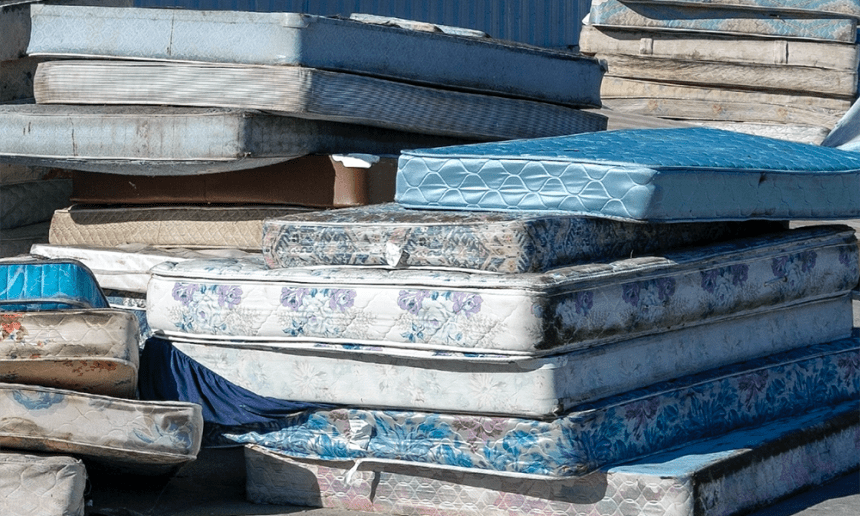
Here’s something most junk removal companies won’t tell you: a large portion of mattresses collected in Australia end up in landfill – not because recycling is impossible, but because it’s easier and cheaper for general rubbish removal services to skip the hard part. Mattresses are bulky, awkward to process, and require a specialised facility to break down properly, and for companies not set up to handle that, landfill is simply the path of least resistance. There’s rarely any transparency about where your items go once the truck leaves the kerb.
TMRC’s mattress collection service operates differently because mattress recycling is the entire business – not a side offering, not a marketing line. Every mattress collected goes through a deliberate process at a licensed recycling facility, and none of it ends at a tip.
1.8 Million Mattresses a Year and Most End Up in Landfill
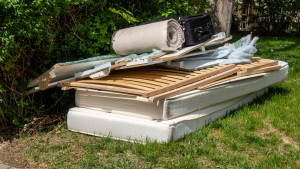
To understand why responsible mattress collection matters, it helps to know the scale of the problem. Approximately 1.8 million mattresses are discarded in Australia every year. The majority end up in landfill, taking up significant space, resisting compaction, and taking many decades to fully decompose
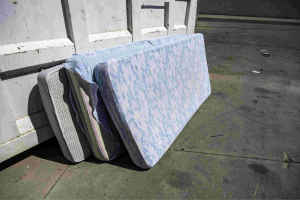
Mattresses are among the most problematic items in landfill because of their bulk and composition. They trap air, break down slowly, and waste materials that could have been recovered and reused. Many also end up illegally dumped on nature strips, in parks, beside council bins, because people don’t know what else to do with them or want to avoid tip fees.
The infrastructure for mattress recycling exists. The gap is awareness and access. When people know there’s a responsible option that’s convenient, clearly priced, and actually does what it says, most will choose it.
How Are Mattresses Recycled? Here’s What Actually Happens
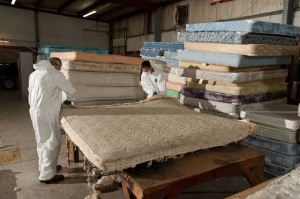
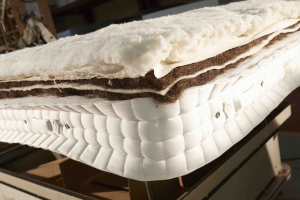
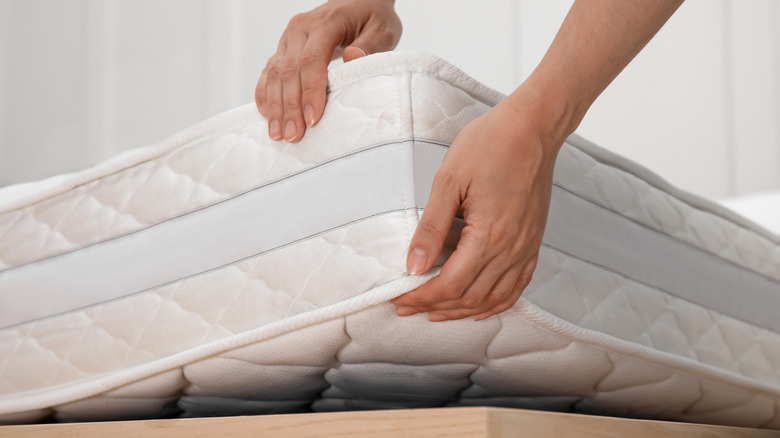
A mattress is made up of several different materials compressed together over years of use, and recycling one properly means taking it apart and directing each component to where it can be genuinely reused. Here’s what that process looks like.
Steel Spring Recycling: Where Your Springs End Up
Innerspring mattresses contain a significant amount of high-quality steel. Once a mattress arrives at the facility, it’s mechanically deconstructed and the steel coils are extracted and baled. That steel is then melted down and recycled into new metal products, the same springs that supported you through years of sleep can end up in construction materials or manufacturing components.
Foam Recycling: Why It Ends Up as Carpet Underlay
The foam layers, whether polyurethane, memory foam, or latex are shredded and processed into new products. Recycled foam is widely used as carpet underlay, meaning the material that cushioned you for years goes on to cushion floors in homes and commercial spaces around the country. It’s a practical second life for a material that would otherwise sit in landfill for decades.
Mattress Fabric and Timber: Nothing Goes to Waste
The fabric cover is separated and processed for fibre recycling. Timber components found in some older mattress bases and ensemble sets are chipped and repurposed as mulch or biomass. Very little of a mattress, when properly deconstructed, actually needs to be discarded. You can learn more about how TMRC approaches this on the About Our Company page.
Some Mattresses Don’t Get Recycled, They Get Donated
Not every mattress that comes through TMRC’s collection process ends up being deconstructed. Through The Mattress Project, those in good enough condition get a more direct second life instead. Each one is steam cleaned, sanitised, and fully rejuvenated before being donated to people who genuinely need it, from families in disadvantaged circumstances and remote indigenous communities, to transitional workers, new immigrants, and victims of domestic violence.
This is one of the things that sets us apart from any standard removal service. It’s not just about diverting waste from landfill, it’s about recognising that a mattress in decent condition still has real value, and that value belongs with someone who needs it. As we put it: everyone deserves a good night’s sleep.
Ready to Book a Mattress Collection?
If you’ve already used TMRC, you now know your mattress didn’t end up in a skip. It was either deconstructed into recoverable materials: steel, foam, fabric, and timber or steam cleaned and passed on to someone who needed it. If you’re coming up on a new mattress purchase, a bedroom renovation, or a property clean-out, booking is straightforward. We offer both kerbside pickup and inside property removal across Melbourne, Geelong, Ararat, Brisbane, the Gold Coast, and the Sunshine Coast, seven days a week from 7am to 9pm, with upfront pricing confirmed at the time of booking.
No landfill. No vague promises. Just a mattress collection service that takes recycling seriously because that’s the only thing it does.