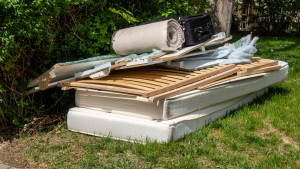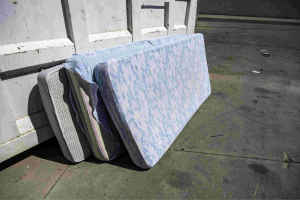

You book a collection. Someone arrives, loads the mattress onto a truck, and drives away. And then what?
Most people never find out what happens to a mattress after it’s collected. The assumption is simple: it goes to the tip. For many of the 1.8 million mattresses discarded across Australia each year, that assumption holds true.
Mattresses are bulky, awkward to transport, and most councils don’t have the infrastructure to do much more than bury them. But the second life of a mattress begins when disposal ends, and recovery takes over. That story splits into two very different paths, and both of them begin at our facility.
The Moment of Decision: Saveable or Unsaveable?
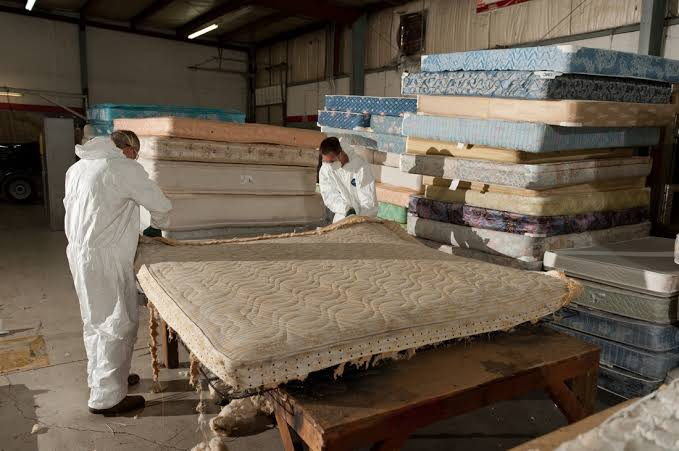
The moment a mattress arrives at the facility, the team assesses it. They check structural integrity, staining, spring condition, and overall wear. This is where mattress disposal stops being about removal and starts being about what comes next.
A mattress that is too worn, degraded, or contaminated to reuse is marked unsaveable and routed to deconstruction. One that still has solid support, clean fabric and intact springs is marked saveable and enters the refurbishment line instead. The mattress’s next use starts right here, with a single decision made within minutes of arrival.
Path One: Inside the Deconstruction Process
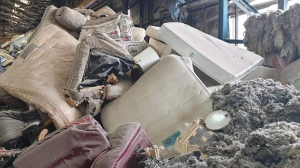
An unsaveable mattress doesn’t go to landfill. It goes through mattress deconstruction, where steel, foam and fabric are separated by hand into single-source material streams. Nothing about this stage is gentle. It’s steel bales, shredded foam and a production line, not a bedroom.
Breaking Down the Materials
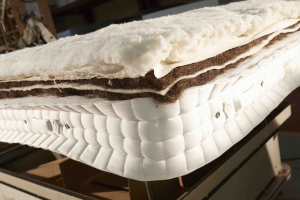
A typical innerspring mattress contains steel coils, polyurethane foam, fabric covers and sometimes a timber frame. Each of these materials is bonded together in ways that make disposal genuinely complicated, which is exactly why deconstruction separates them out individually:
- Steel springs are typically compressed into bales and sent to scrap metal processors, where they can be melted down and returned to the supply chain as raw material for new steel products
- Foam layers are cleaned and shredded for reprocessing into secondary materials used across construction and flooring industries
- Fabric and textiles are separated for reuse in industrial filtration and insulation
- Timber frames are chipped and repurposed as biomass fuel or garden mulch
Nothing leaves the line as mixed waste. The goal is single-source recovery at every stage, because once materials are combined again, the only destination left is landfill.
Foam’s New Life as Carpet Underlay
Of all the materials recovered, foam tells the most unexpected story. Once cleaned and shredded, this foam becomes carpet underlay: the cushioned layer beneath flooring in homes, offices and commercial fit-outs.
It is an unexpected way to keep mattress foam in use. The foam that once supported someone’s sleep could go on to sit quietly beneath someone’s flooring, performing a completely different role but still in active use. That kind of material recovery keeps the foam in productive circulation rather than buried underground where it could sit for the next 100 years or more.
Path Two: The Mattress That Gets a Second Chance
Not every mattress needs to be taken apart. Some still have years of comfort left in them, and for these, the second life of a mattress is far more direct. It goes to someone who needs it.
Refurbishment: Cleaning, Repair and Restoration
Saveable mattresses go through a comprehensive onsite refurbishment process designed to bring them back to a hygienic, usable standard. Each one is:
- Steam cleaned at high temperature to remove deep contaminants
- Sanitised to eliminate bacteria, dust mites and allergens
- Deodorised to remove residual odours
- Repackaged in clean wrapping, ready for immediate use
It’s a full restoration rather than a surface wipe, extending the mattress’s usable life by years and keeping it out of landfill entirely.
A Refurbished Mattress Finds a New Life With a Transitional Worker
Once restored, mattresses are made available through The Mattress Project, which connects refurbished mattresses with people who need them most. Recipients include transitional workers, domestic violence survivors, newly arrived immigrants and remote Indigenous communities across Australia.
This is where a mattress gets a meaningful new purpose. A refurbished mattress for a transitional worker means someone starting a new chapter with a clean, healthy bed to sleep on, sometimes for the first time in months.
The Mattress Project, one of Australia’s mattress donation programs, takes something most people consider waste and turns it into something that genuinely changes how someone starts their morning. That shift from disposal to dignity is what separates a mattress collection service from a genuine community program.
Why Both Paths Matter
Whether a mattress is pulled apart for raw materials or handed to a family starting over, the outcome is the same: it stays out of landfill. According to the Australian Bedding Stewardship Council, mattress components break down extremely slowly once buried. Foam and synthetic textiles can persist in landfill for well over a century, taking up space that Australian cities simply cannot afford to waste.
Keeping Mattresses Out of Landfill
Every mattress diverted recovers materials that would otherwise be permanently lost. The continued use of a mattress’s recovered materials, whether it ends up as carpet underlay beneath someone’s feet or as a bed beneath someone’s back, always beats burial. Both paths feed the kind of circular thinking that building a better planet depends on.
Supporting Communities Beyond Recycling
Deconstruction sends recovered steel, foam and timber back into local manufacturing and materials supply chains across Victoria. Refurbishment puts clean, restored beds under people who currently don’t have one. Together, the second life of a mattress generates both environmental and social value. A trip to the tip could never do both.
The Next Second Life Could Start With Yours
Every mattress has a recycling story waiting to happen. The one in your spare room, leaning against the garage wall, or being swapped out next weekend could become carpet underlay in a new apartment or a clean bed for a family starting fresh.
The second life of a mattress doesn’t begin at a recycling facility. It begins with the choice to keep it out of landfill. And now you know exactly where old mattresses go once The Mattress Recycling Company gets involved.
Get to know the team behind The Mattress Recycling Company.