
Have you ever wondered what’s actually inside your mattress? It’s the one household item we sleep on for a third of our lives without ever thinking about what it’s actually made of, until the day we need to get rid of it.
That’s when the questions start. Why can’t it just go in the recycling bin? Why does council pickup treat it differently to a couch or a fridge? The answer isn’t really about the mattress itself. It’s about what’s packed inside it, and how those materials were put together in the first place.
What’s Actually Packed Into a Mattress
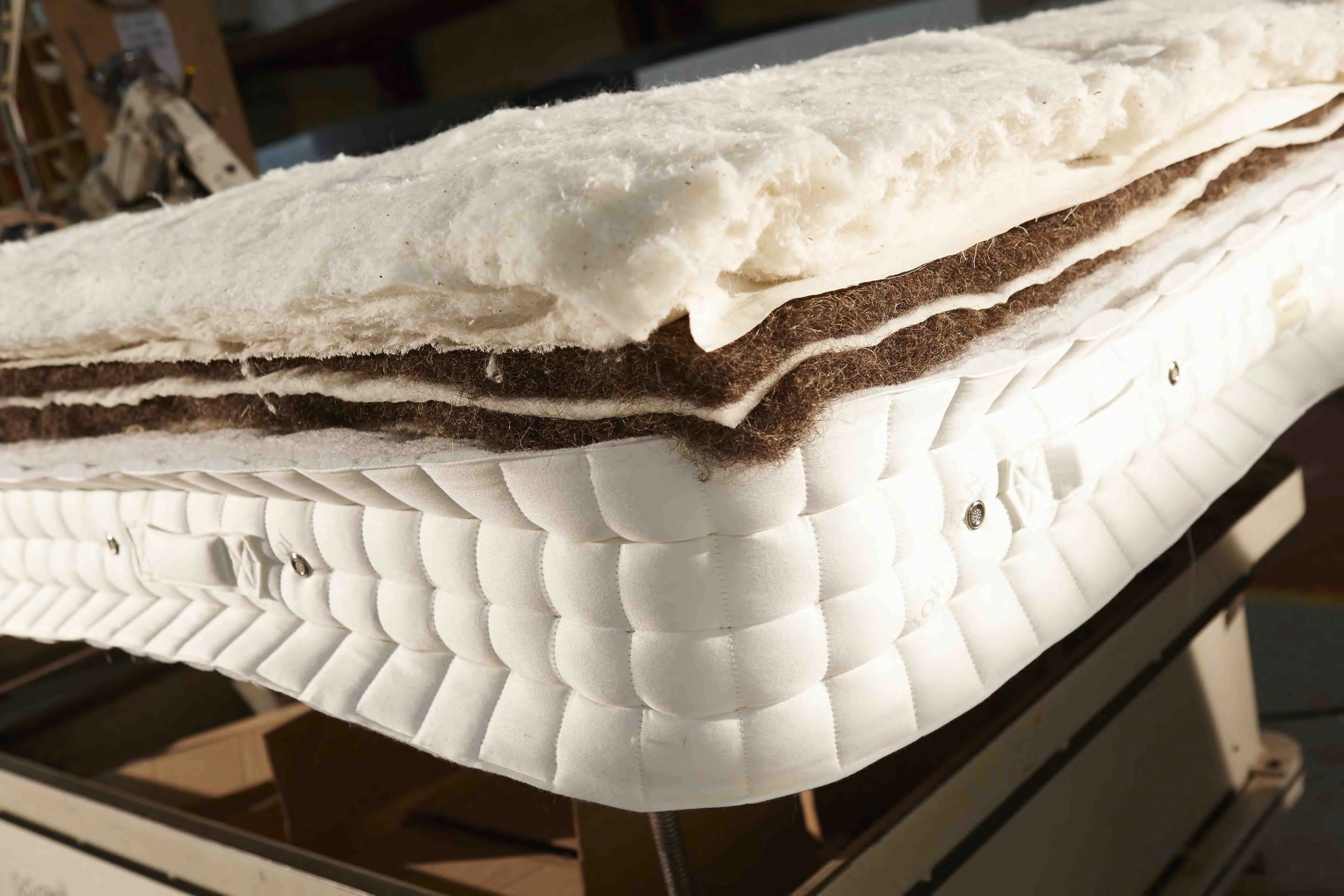
A modern mattress isn’t one material. It’s several, layered and bonded into a single object that’s designed to never come apart again, at least not easily.
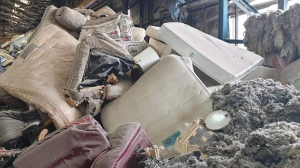
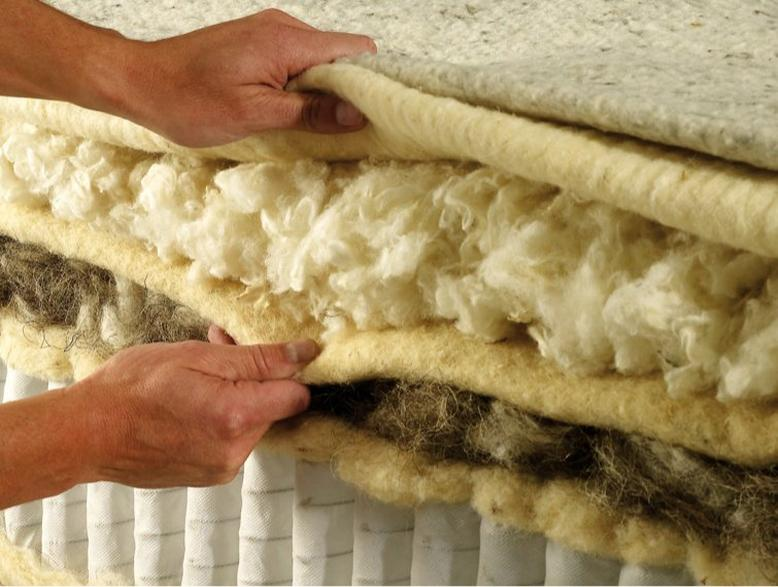
Start at the base of most mattresses, and you’ll find a steel coil system, hundreds of individual springs wrapped or interconnected to give the mattress its support and bounce. Above that sits foam, and several types are doing different jobs: polyurethane foam for cushioning, memory foam for pressure relief, sometimes layered together to fine-tune the feel. Some mattresses swap synthetic foam for natural latex, prized for being more breathable and longer-lasting. Then there’s cotton batting, used to pad out layers and add softness, along with timber framing in some bed bases and box springs. Wrapping around all of it is the fabric cover, stitched and often glued into place.
On its own, each of these materials is genuinely easy to deal with. Steel is one of the most recyclable materials on the planet. Foam can be repurposed. Timber can be mulched. Fabric and cotton can be broken down and reused. The problem isn’t the materials. It’s that a mattress fuses five or six of them into one object that was built to hold together, not to be taken apart.
Why Mixed Materials Break Every Recycling Rule
Household recycling works on a simple principle: sort materials into single, clean streams, and processors can do something with them. Glass with glass. Paper with paper. Metal with metal. A mattress breaks that principle at every step.
Steel springs are easy to melt down and reuse, but only once they’re separated from everything wrapped around them. Bury a coil system inside foam and fabric, and it’s no longer scrap metal. It’s a contaminated, oversized object that no standard recycling stream will touch.
Foam behaves even worse. Polyurethane foam and memory foam don’t break down in any of the ways household recycling is set up to handle, and they can’t simply be shredded and mixed with other waste without processing first. Left whole, foam is bulky and slow to compact, which is part of why a single mattress takes up so much more space than its weight would suggest.
Then there’s the construction itself. Everything in a mattress- springs, foam, cotton, and fabric- is glued, stitched or wrapped together specifically so it won’t shift or separate during years of everyday use. That’s excellent engineering for a product you sleep on. It’s a genuine problem for anyone trying to recycle it, because every one of those materials has to be physically pulled apart by hand before any of it can go anywhere useful. There’s no kerbside bin, sorting facility or council truck set up to do that. It’s precisely why proper mattress disposal looks so different to putting out your recycling on bin night.
What Landfill Actually Does to a Mattress
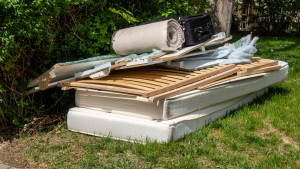
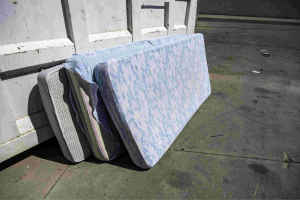
Without a proper collection and recycling pathway, most old mattresses end up exactly where none of their materials belong: in landfill.
Mattresses don’t compact the way other bulky waste does. Their coil systems resist being crushed flat, so they take up disproportionate space in a landfill cell for years. The foam and fabric that made a mattress comfortable to sleep on start to break down slowly, and as they do, they can release compounds into the surrounding environment over time, particularly in older or unlined landfill sites.
None of this happens quickly. A mattress buried in landfill isn’t gone in a season or even a decade. The steel, the foam, the timber, all of the raw material and manufacturing that went into it, are effectively locked away and lost, doing nothing but taking up space that other waste, with genuinely nowhere else to go, could have used instead.
Why Deconstruction Solves What Recycling Bins Can’t
If mixed materials are the whole problem, then the fix is straightforward in theory, even if it’s labour-intensive in practice: take the mattress apart, material by material, until each one is clean enough to recycle properly on its own.
Not every mattress needs this treatment; ones still in good condition are refurbished and donated instead, but for mattresses beyond saving, deconstruction is the only way to actually recycle what’s inside them.
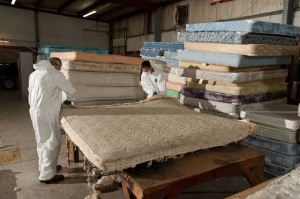
That’s exactly what deconstruction does. Instead of trying to force a whole mattress through a recycling process designed for single materials, our deconstruction process breaks each mattress down by hand into its separate components. Steel is pulled free and sent off as scrap metal. Foam is separated for reuse. Fabric and cotton are sorted from timber framing. Once every material is on its own, each one can go where it’s actually meant to go, rather than sitting whole in a landfill cell doing nothing.
It’s a slower, more hands-on approach than tossing a mattress on a truck and hoping for the best, but it’s the only approach that actually solves the underlying problem for mattresses that can’t be saved. You can’t recycle a mixed object. You can only recycle what’s inside it, once it’s been properly separated.
Closing the Loop on Mattress Waste
Once you understand what’s actually inside a mattress, the disposal problem stops being confusing and starts making sense. It’s not that mattresses are somehow unrecyclable. It’s that recycling a mixed, bonded object requires taking it apart first, and that’s a step most waste systems simply aren’t built to do.
That’s the gap deconstruction is designed to close. Every material that comes out of a mattress in good, separated condition is one less thing buried for decades in landfill, and one more resource put back into use. It’s part of the same thinking behind Love Not Landfill: the goal isn’t just moving mattresses out of your home, it’s making sure what’s inside them actually goes somewhere useful.
So next time you’re staring down an old mattress wondering why it can’t just go out with the recycling, you’ll know the real answer. It’s not the mattress. It’s what’s inside it, and what it takes to properly pull that apart.